Discover Yourself: An Erasmus+ Project on Digital Storytelling
Are you interested in digital storytelling as a tool for empowering adult groups?
KARPOS is participating in a dynamic European consortium through the innovative Discover Yourself project. The project uses digital storytelling and media education to help learners of all ages safely express their emotions, build self-confidence, develop empathy, and promote social inclusion across six European countries.
A New Milestone
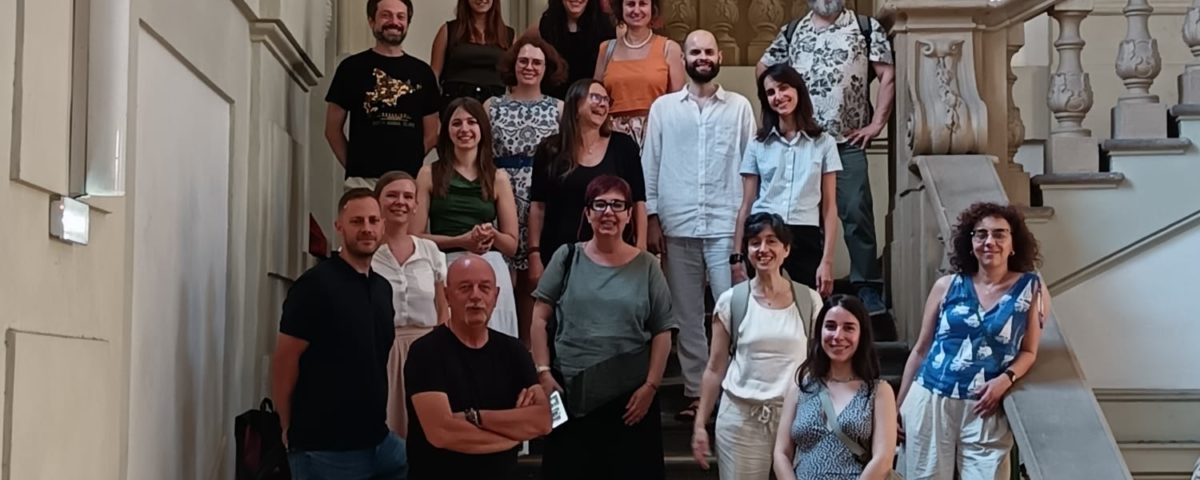
DISCOVER YOURSELF has reached an important new milestone. From 14 to 16 July 2026, project partners met in Bologna for the first Joint Training and Good Practice Exchange, hosted by the Alma Mater Studiorum – University of Bologna (UNIBO), with Professor Pier Cesare Rivoltella as host.
Our university partners warmly welcomed us, giving us the opportunity to learn, exchange experiences, and collaborate in an open and inspiring environment. The training brought together professionals who will contribute to the design and implementation of inclusive storytelling workshops within the project.
Through hands-on activities, we explored the fundamental principles of digital storytelling and how stories can be developed through observing, interpreting, and creating meaning from images and personal experiences. We also became familiar with the EAS approach, which connects attention, emotion, action, and reflection within the learning process.
An important part of the programme focused on inclusive and ethically responsible storytelling. We discussed how activities can be adapted to different abilities, backgrounds, and communication needs, while respecting consent, privacy, and personal boundaries. Participants also worked in groups to design short storytelling activities that can later be adapted to different educational settings.
On the second day, partners presented European examples of good practice in digital storytelling, compared different case studies, and took part in a practical workshop. The training reminded us that digital tools are not an end in themselves. They are a means of connecting people, supporting learning, and encouraging personal development. At the heart of the process is always the person – their voice, their emotions, and their story.
In mixed groups, participants created their own compositions using tools such as photo comics, a technique that KARPOS uses in workshops with children as young as four, as well as adults and groups with refugee backgrounds. They also explored animation and the Hero’s Journey methodology.
Digital Storytelling at the Tactile Art Museum
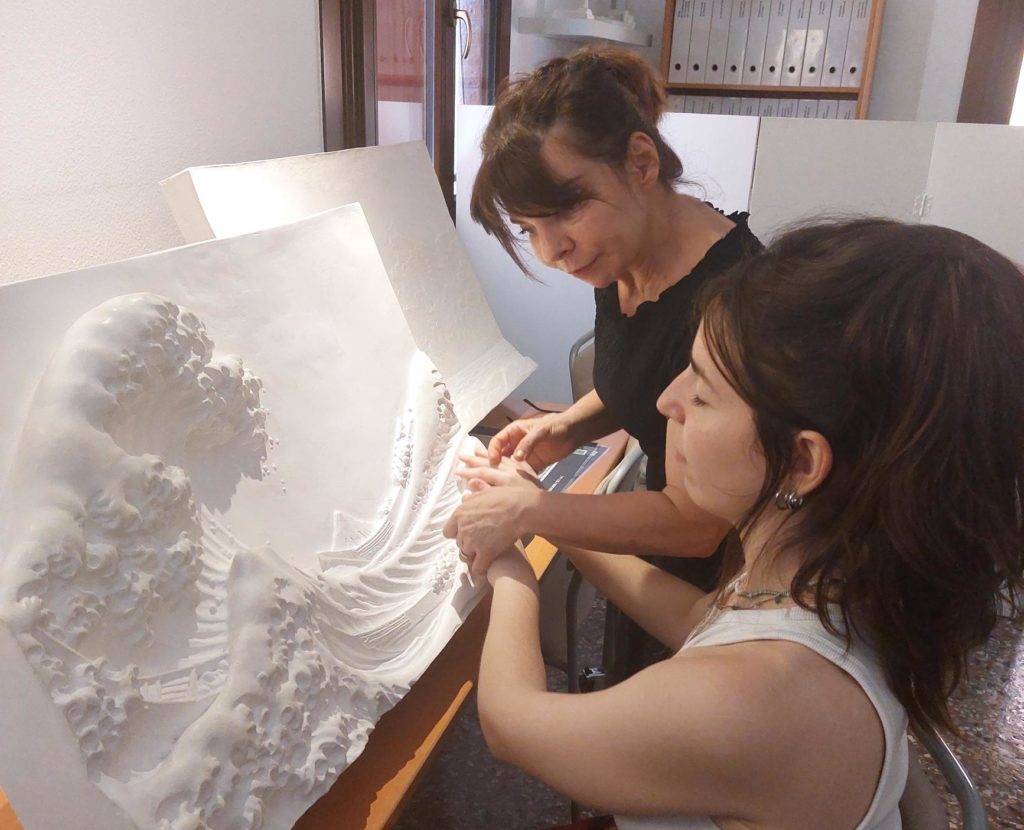
On 16 July, we visited the Francesco Cavazza Institute for the Blind and the Anteros Tactile Art Museum, where accessibility and the experience of art through touch were at the heart of our visit.
For many years, the Institute has been dedicated to the education, rehabilitation, social inclusion, and independent living of blind people and people with visual impairments. By following technological, scientific, and social developments, it continues to create new opportunities for learning and professional development.
During our visit, we explored three-dimensional tactile representations of famous classical and contemporary works of art. Through touch, we discovered shapes, details, and compositions that are usually perceived visually.
It was a powerful reminder that stories can be communicated in many different ways – not only through words and images, but also through touch, sound, movement, and emotion.
Funded by the European Union. However, the views and opinions expressed are solely those of the authors and do not necessarily reflect those of the European Union or the European Education and Culture Executive Agency (EACEA). Neither the European Union nor EACEA can be held responsible for them.